
The Shapash Project, New Python Book, OpenClaw Tutorials | Issue 74
A weekly curated update on data science and engineering topics and resources.
This week’s agenda:
Open Source of the Week - the Shapash project
New learning resources - Harvard CS50 (2026), introduction to Reinforcement Learning, getting started with OpenClaw, relational database design course
Book of the week - Software Design for Python Programmers by Ronald Mak
The newsletter is also available on LinkedIn and Medium.
Check out last week's issue: The QueryChat Project, Mathematics of Machine Learning, New Tutorials

Are you interested in learning how to set up automated workflows with GitHub Actions? If so, please check out my course on LinkedIn Learning:
Open Source of the Week
This week’s focus is on the Shapash project - A Python library for making machine learning interpretable and comprehensible for both technical and non-technical users. Instead of presenting opaque feature attributions, Shapash builds on explainability backends like SHAP or LIME to generate clear visualizations, interactive web applications, and shareable reports that show how model inputs influence predictions. This approach helps data scientists explore model behavior, communicate insights with stakeholders, and document results for auditing or governance purposes.
Project repo: https://github.com/MAIF/shapash
Key Features
Provides global and local explainability visualizations with explicit, easy-to-understand labels.
Includes an interactive web application for exploring model explanations across different views.
Generates standalone HTML reports summarizing model behavior and explainability metrics for sharing or auditing.
Supports a wide range of supervised models (e.g., scikit-learn, XGBoost, LightGBM, CatBoost).
Compatible with explainability backends such as SHAP and LIME to compute feature contributions.
Offers tools to filter, summarize, and export local explanations for further analysis.
Designed to assist with model transparency across regression, binary classification, and multiclass tasks and to support deployment via API or batch workflows.
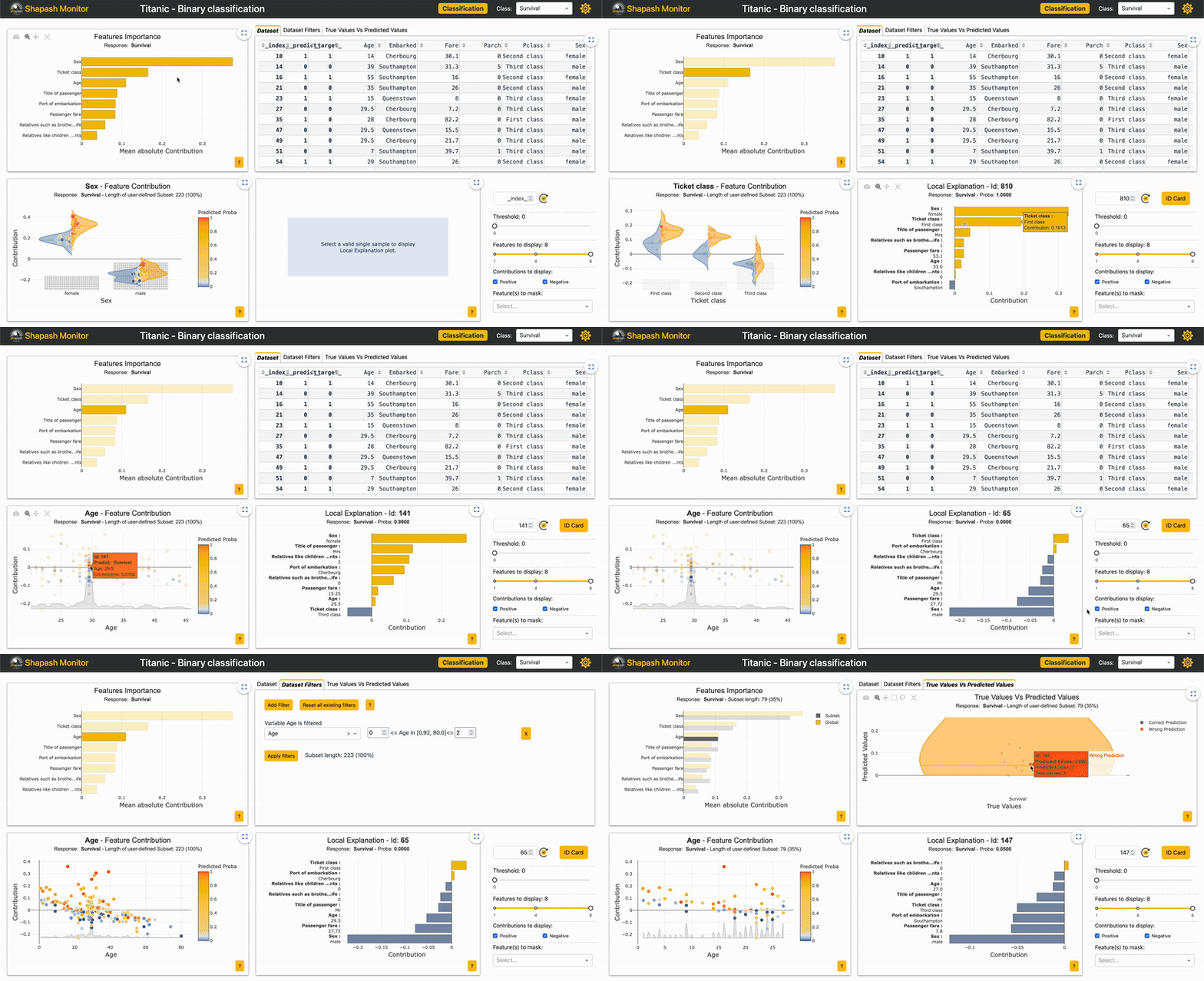
More details are available in the project documentation.
License: Apache-2.0
New Learning Resources
Here are some new learning resources that I came across this week.
Harvard CS50 Computer Science Course (v2026)
A new version of the Harvard CS50 course - Introduction to Computer Science. This full-semester course (24 hours) by Prof. David J. Malan is a great resource for getting started in computer science. It focuses on the foundations of CS and covers topics such as arrays and data structures, as well as programming languages (e.g., Python, SQL, C), and AI.
Introduction to Reinforcement Learning
The following tutorial by Shaw Talebi provides an introduction to Reinforcement Learning. This tutorial is part of a series that focuses on RL applications with LLMs.
Getting Started with OpenClew
This one-hour tutorial by Kian Kyars provides a comprehensive introduction to OpenClaw, a proactive autonomous agent and messaging gateway that allows you to automate digital tasks through platforms like WhatsApp, Telegram, and Discord.
Set up OpenClaw Securely
Another tutorial focuses on setting up OpenClaw by Tech with Tim.
Relational Database Design
The following course by Prof. Qiang Hao focuses on relational database design. This includes topics such as SQL fundamentals, entity-relationship modeling, normalization (1NF through BCNF), data types and constraints, indexing strategies, and query optimization.
Book of the Week
This week’s focus is on a new Python book, Software Design for Python Programmers by Ronald Mak. This practical, example-driven guide helps Python developers level up from writing scripts to designing clean, maintainable, and scalable applications using solid object-oriented design principles and classic design patterns — all expressed in a Pythonic style. The book uses intuitive “before” and “after” code examples throughout to show how thoughtful design transforms messy code into well-structured, reliable software.
What the book covers
Analyze requirements and plan application architecture
Evolve designs through iterative development
Shape Python classes with high cohesion and loose coupling
Use decorators to introduce abstraction, enforce constraints, and enrich behavior
Apply industry-standard design principles to keep code modular and maintainable
Choose and implement the right design patterns for complex challenges
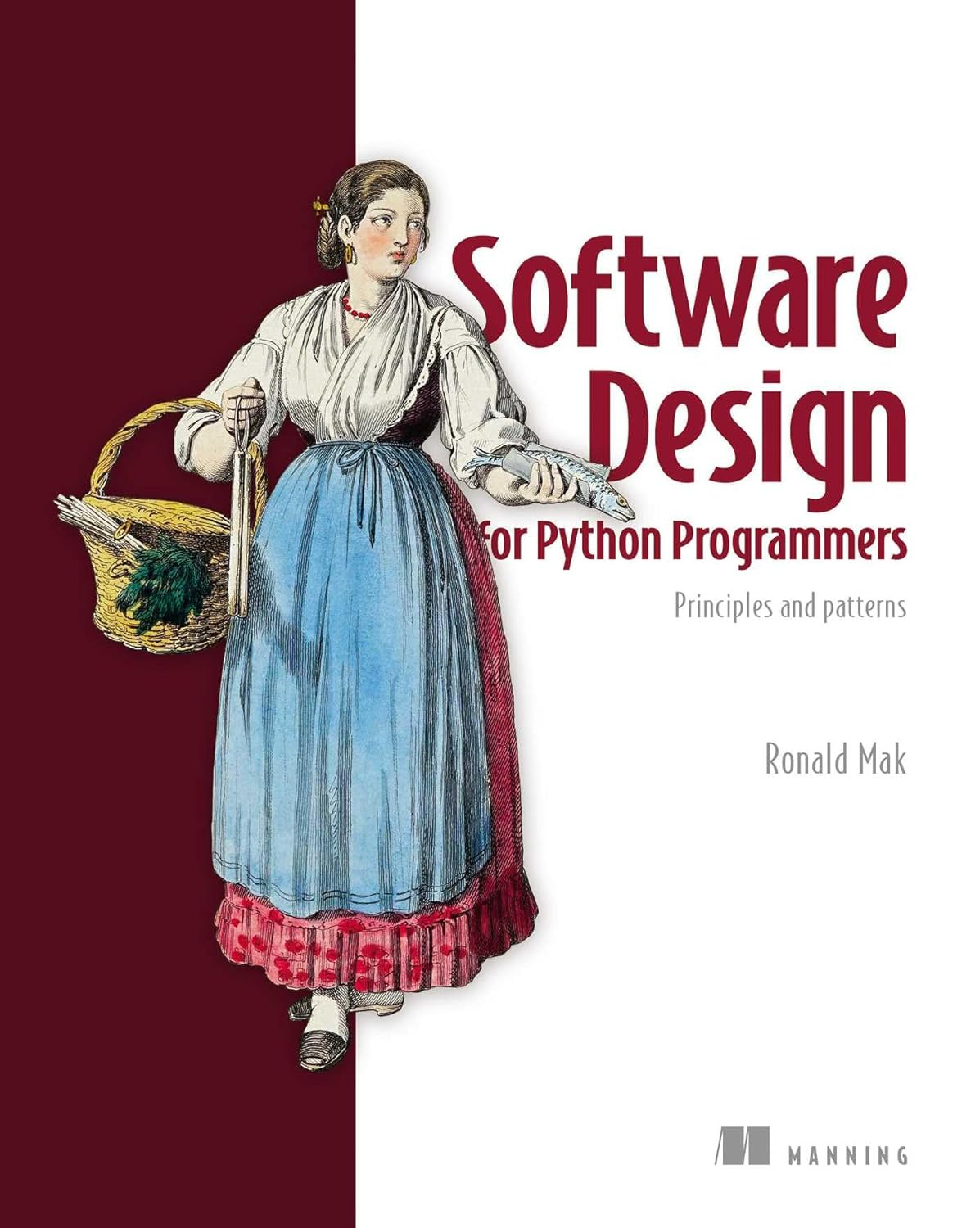
This book is ideal for Python programmers who are already comfortable with the language’s syntax and basics and want to become stronger software designers — writing code that is cleaner, more robust, easier to maintain, and built to support real production-scale applications.
The book is available online on the publisher’s website, and a hard copy can be purchased on Amazon.
Have any questions? Please comment below!
See you next Saturday!
Thanks,
Rami