

This week’s agenda:
Open Source of the Week - Unsloth Studio
New learning resources - Hermes desktop workflows, ML system design, and Docker Sandboxes
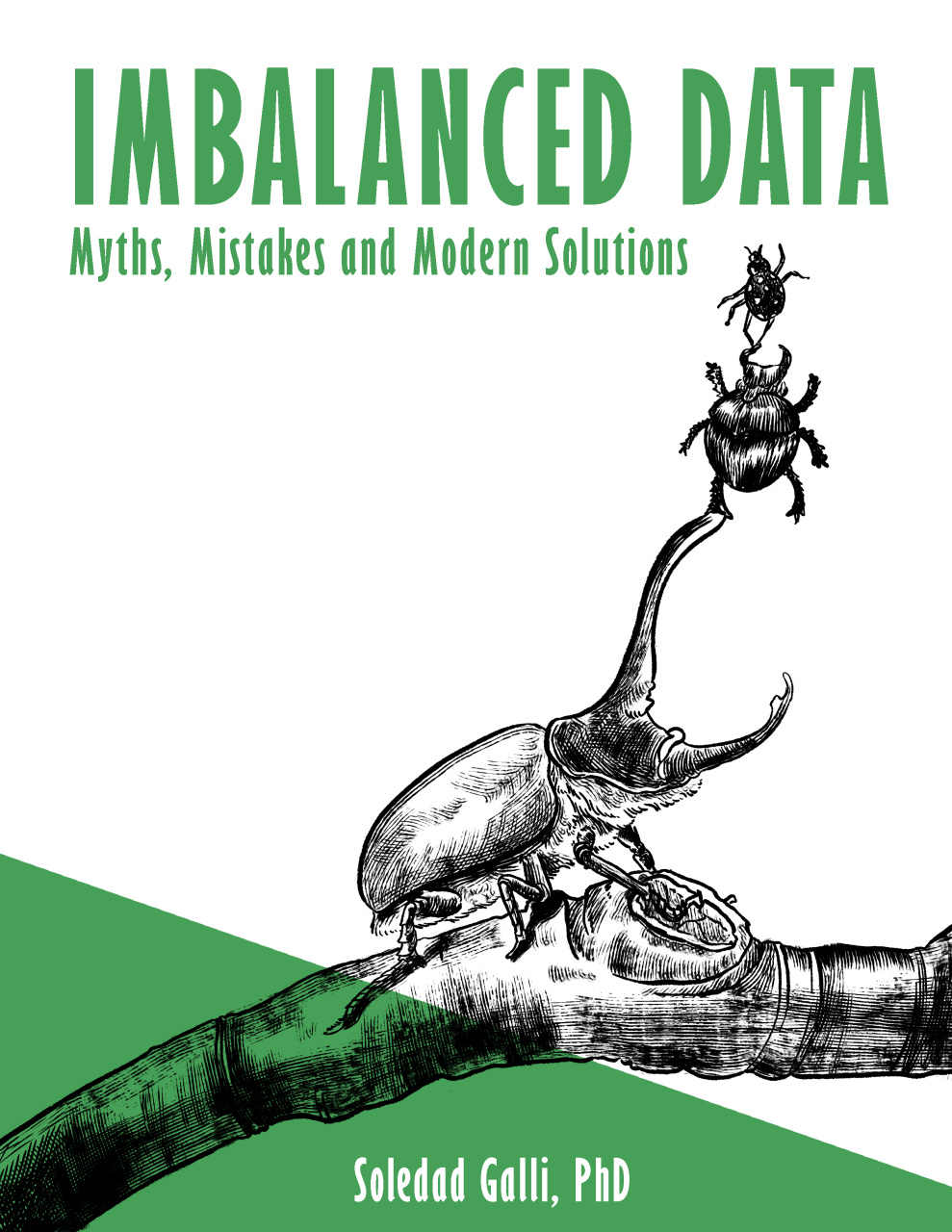
Book of the week - Imbalanced Data: Myths, Mistakes and Modern Solutions
The newsletter is also available on LinkedIn and Substack.

Are you interested in learning about SQL AI agents in production? If so, please check out my LinkedIn Learning course:
Open Source of the Week
Unsloth Studio is the new open-source, browser-based interface from Unsloth AI for running and training models locally without building the workflow in code. It brings model discovery, chat and inference, dataset preparation, fine-tuning, training monitoring, export, and serving into one interface. Rather than moving between notebooks, command-line tools, and separate model runners, Studio organizes the local model workflow around dedicated tools for chat, Data Recipes, training, and export.
Project repo: https://github.com/unslothai/unsloth
Key Features
Local Studio interface — Use a browser-based GUI to run and train models on local Mac, Windows, and Linux systems.
Model discovery and chat — Search for, download, and run GGUF and Safetensors models from the Studio Chat interface.
Side-by-side comparison — Compare responses from two models in the same interface before selecting one for a workflow.
Tools and code execution — Give local models access to tool calling, web search, and Python or Bash execution.
No-code training — Configure fine-tuning runs and monitor training progress, loss, and hardware usage without writing the training pipeline in code.
Data Recipes — Turn files such as PDFs, CSVs, JSON, and Word documents into training datasets through a visual workflow.
Model export — Export trained models and checkpoints as GGUF, Safetensors, or LoRA files for local inference and deployment tools.
API serving — Expose local models through an OpenAI-compatible API for use by other applications and agents.
More details are available in the Unsloth Studio documentation.
License: Apache 2.0
New Learning Resources
Here are some new learning resources that I came across this week.
ML System Design for Data Scientists
This video from Andres Vourakis walks through a framework for designing production machine learning systems. The 17-minute video covers a six-step design process, four production-system requirements drawn from Chip Huyen’s work, and a layer-by-layer application of the framework to a trial-to-paid conversion system.
Hermes Desktop: SSH, Custom Layouts, Widgets, and Kanban
This video from Tonbi’s AI Garage walks through recent Hermes desktop workflows. The 16-minute video covers connecting to remote machines over SSH, arranging multi-session panes and tabs, dragging context into sessions, building widgets with the Plugin SDK, and using the Kanban plugin to delegate a knowledge-base workflow across researcher, writer, and verifier profiles.
Getting Started with Docker Sandboxes
This tutorial from Docker walks through setting up an isolated development environment for AI-assisted coding. The five-minute tutorial covers installing the Sandbox CLI, authenticating a Docker account, launching a sandbox, mounting a workspace, and using the same environment with Claude and Codex.
Book of the Week
This week’s focus is on a new machine learning book — Imbalanced Data: Myths, Mistakes and Modern Solutions by Soledad Galli, PhD. The book challenges the common assumption that class imbalance must be fixed through resampling. Instead, it explains how model evaluation, probability thresholds, real-world error costs, and calibration shape classification decisions. It also examines where oversampling, undersampling, and SMOTE can introduce bias or discard useful data, then presents an evidence-driven workflow for choosing models, metrics, and interventions.
Topics Covered
Class imbalance foundations — Separate class frequency from the factors that actually affect model performance.
Classification metrics — Understand what common metrics measure, where they can mislead, and how to choose metrics that fit the decision problem.
Decision thresholds — Move beyond the default 0.5 cutoff and select thresholds that reflect practical requirements.
Probability calibration — Assess reliability, identify what breaks calibration, and recalibrate biased probabilities in Python.
Cost-sensitive learning — Connect thresholds, class weights, resampling, and the real costs of different errors.
Undersampling and cleaning — Examine when removing observations discards useful information and how modern models change the tradeoffs.
Oversampling and SMOTE — Review why synthetic sampling can introduce bias and the limited cases where oversampling may still help.
Imbalanced learning with AI — Use AI to analyze data and build a pipeline, then audit and revise its methodological choices.
This book is ideal for data scientists, machine learning engineers, and practitioners who build classification systems and want to make better decisions about metrics, thresholds, calibration, and resampling.
The ebook is available for purchase on the publisher’s website.
Have any questions? Please comment below!
See you next Saturday!
Thanks,
Rami
Thanks for reading Rami’s Data Newsletter! Subscribe for free to receive new posts and support my work.
Disclaimer: I use AI to help edit the content in this newsletter. If you spot a mistake, please leave a comment — I’d appreciate the heads-up.