
The Trackio Project and Deep Learning with PyTorch | Issue 81
A weekly curated update on data science and engineering topics and resources.

This week's agenda:
Open Source of the Week - The Trackio project
New learning resources - Harvard computer science course for business, Claude Code tutorial, Running Claude Code from Telegram, authentication concepts
Book of the week - Deep Learning with PyTorch, Second Edition by Luca Antiga, Eli Stevens, Howard Huang, and Thomas Viehmann
The newsletter is also available on LinkedIn and Medium.

Are you interested in learning how to set up automation using GitHub Actions? If so, please check out my course on LinkedIn Learning:
Open Source of the Week
This week’s focus is on the trackio project - a lightweight AI experimentation framework Python library from Hugging Face. It was designed for use by both humans and AI agents and enables developers to log metrics, parameters, and outputs from machine learning experiments while visualizing results through an interactive dashboard. Designed as a drop-in replacement for common tracking APIs, Trackio focuses on ease of use, transparency, and zero-cost operation by defaulting to local storage and optional cloud sharing via Hugging Face Spaces.
Project repo: https://github.com/gradio-app/trackio
Key Features
Drop-in replacement for W&B: Compatible with common APIs (
init,log,finish), allowing minimal code changesLocal-first design: Stores experiment data in a local SQLite database with no required external services
Interactive dashboard: Visualize metrics and compare runs via a built-in UI powered by Gradio
Optional cloud sharing: Sync and host dashboards on Hugging Face Spaces for collaboration
Lightweight and extensible: Small codebase designed for customization and easy extension
Embeddable dashboards: Share experiment results via iframes in blogs, apps, or documentation
Free and open source: No usage limits, accounts, or paid tiers required
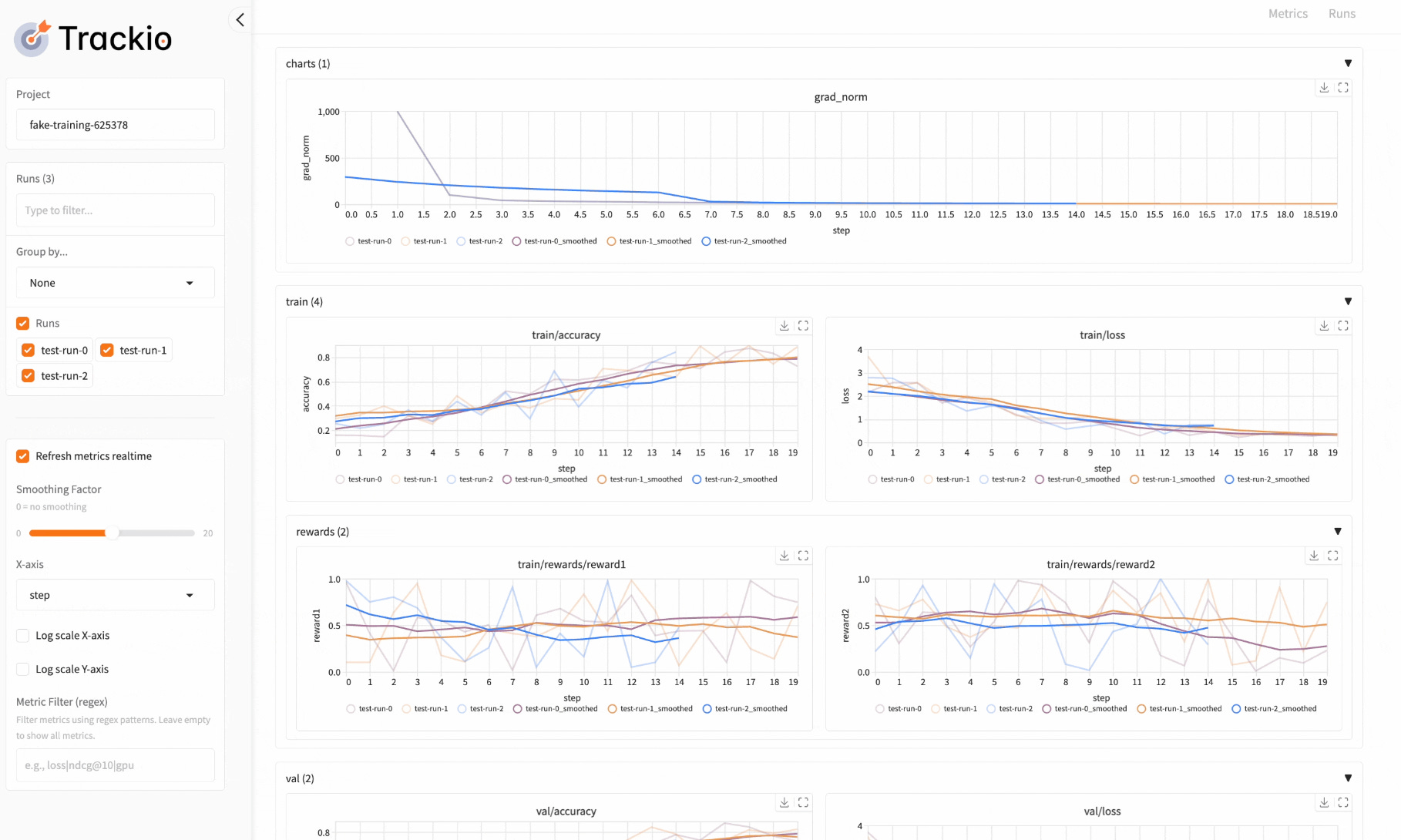
Here is a short tutorial from the Hugging Face team providing an introduction to the key functionality of Trackio:
License: MIT
New Learning Resources
Here are some new learning resources that I came across this week.
Harvard CS50’s Computer Science for Business
Harvard CS50 released a new version of the course, focusing on computer science applications for business professionals, managers, founders, and decision-makers. This 9-lecture series covers topics such as:
Designing a data structure
Practicing programming
Approaching AI
Deploying databases
Security systems
Claude Code Quick Start
The following tutorial by Shaw Talebi provides an introduction to Claude Code for builders.
Running Claude Code from Telegram
This is super cool - the following short video by Mervin Praison ✅ provides a step-by-step guide for setting up a Telegram bot that enables you to run Claude Code from Telegram using Anthropic’s plug-in.
Authentication Concepts
This short video by Hayk Simonyan explains 7 authentication concepts.
Book of the Week
This week’s focus is on a new deep learning book - Deep Learning with PyTorch, Second Edition by Luca Antiga , Eli Stevens , Howard Huang, and Thomas Viehmann. The book provides a practical, code-first guide to modern deep learning with PyTorch. It takes you from fundamental concepts to building and deploying real-world neural networks. Focused on learning by doing, it features step-by-step projects that show how deep learning systems are built, trained, and improved — including the latest developments like transformers and generative AI models.
Topics covered in the book
Deep learning fundamentals with PyTorch — tensors, automatic differentiation, and the mechanics of training neural networks
Building neural networks from start to finish — data loading, model design, training loops, monitoring, and evaluation workflows
Core architectures — implementing convolutional neural networks (CNNs), recurrent neural networks (RNNs), and transformers
Computer vision applications — practical projects like building an image classifier from scratch
Generative AI models — generating text and images using large language models and diffusion models
Model optimization and scaling — enhancing performance through better architectures, training strategies, and distributed computing
Production considerations — deploying models efficiently with hardware acceleration and scalable pipelines.
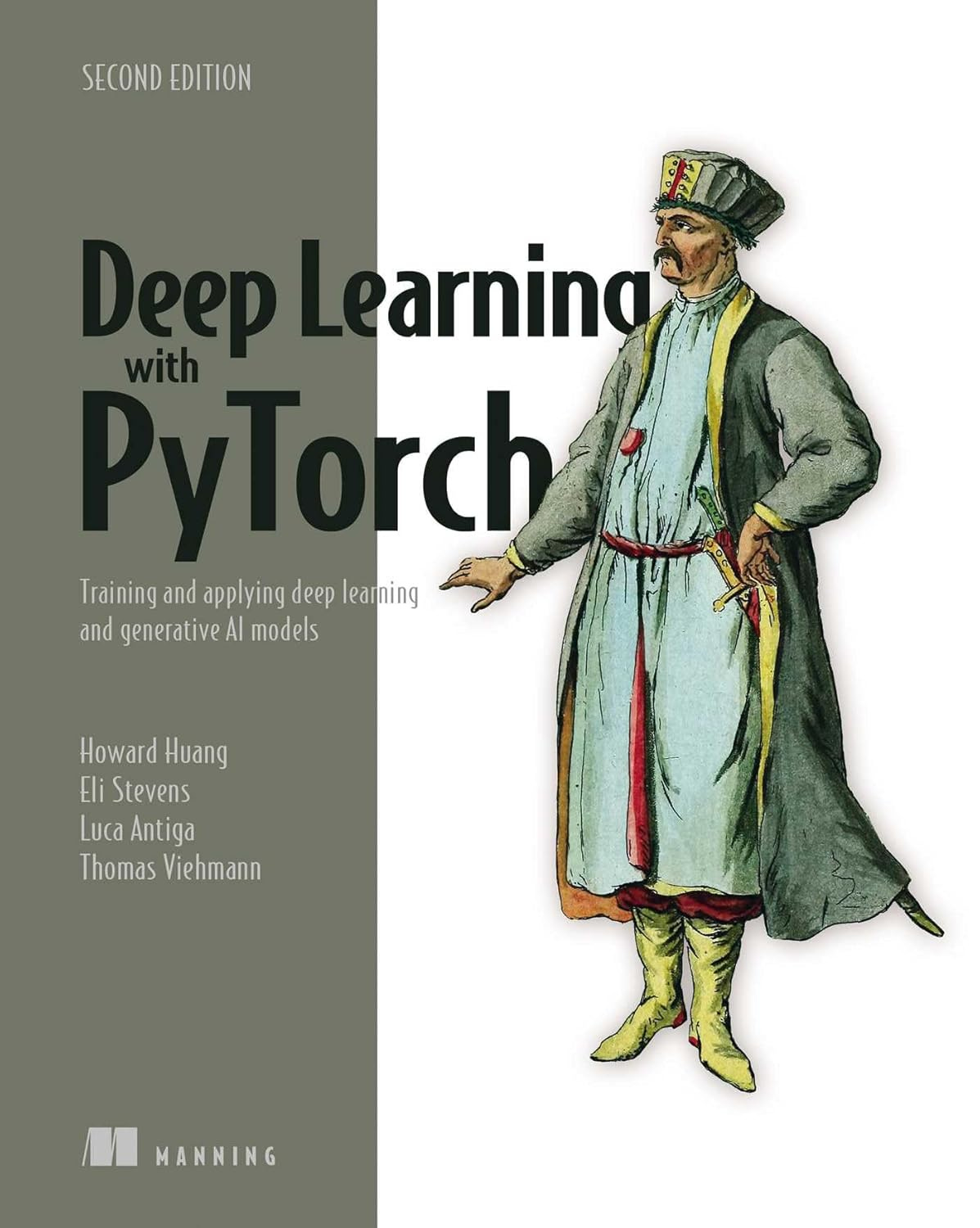
This book is ideal for Python developers, data scientists, and machine learning practitioners who want a practical, hands-on path to mastering deep learning with PyTorch — especially those looking to build modern AI systems, including generative models, in real-world applications.
The book is available for purchase on the publisher’s website and on Amazon.
Have any questions? Please comment below!
See you next Saturday!
Thanks,
Rami