
The NNS-Python Project, Turn 10,994 Notes Into Memory, The Human-Agent Orchestrator | Issue 94
A weekly curated update on data science and engineering topics and resources.

This week’s agenda:
Open Source of the Week - NNS-Python
New learning resources - AI research second brain, 7 agentic AI loops, building a Telegram AI agent, fine-tuning Gemma 4 locally, local RAG crash course, 3 production AI agents in Python
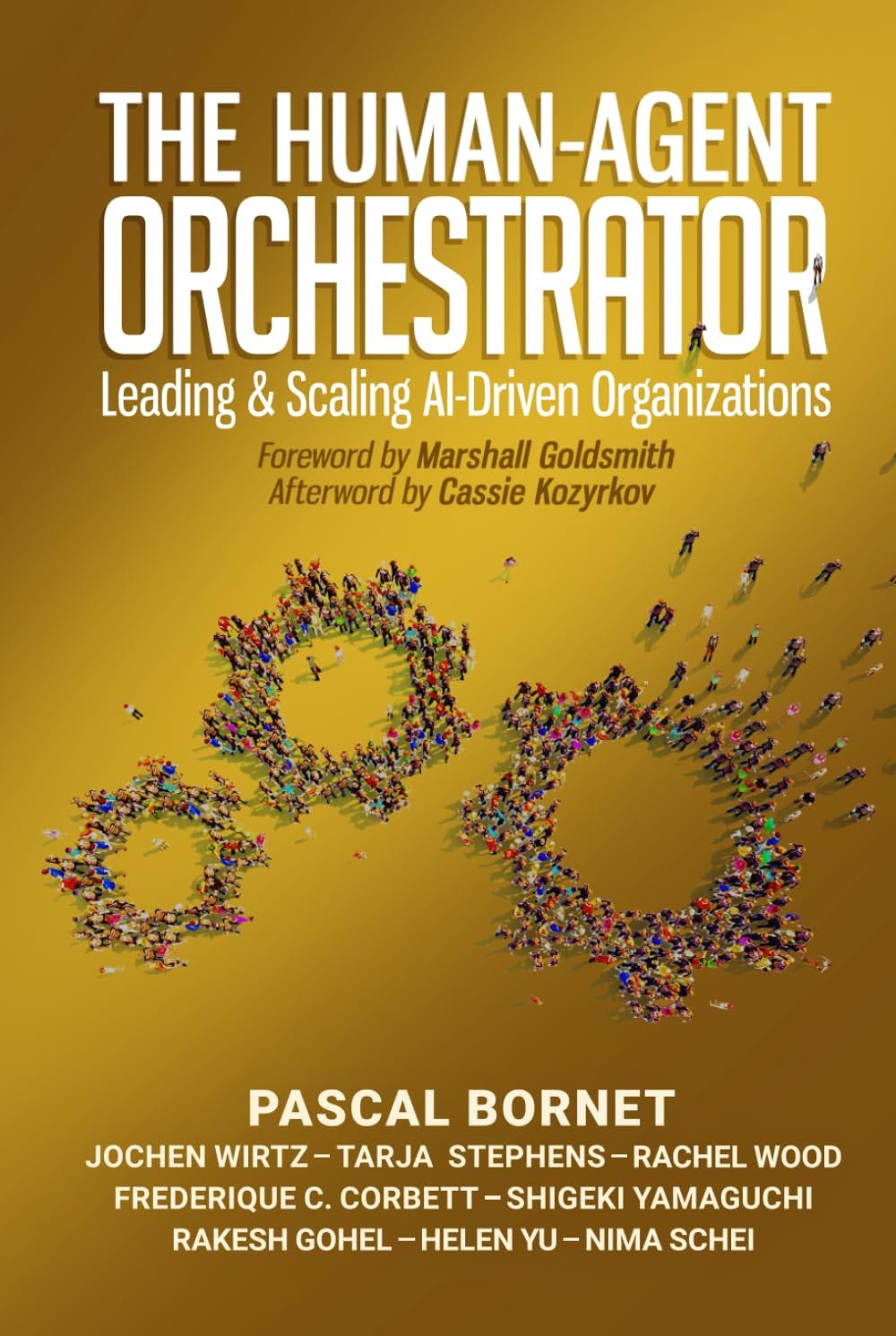
Book of the week - The Human-Agent Orchestrator: Leading and Scaling AI-Driven Organizations by Pascal BORNET and co-authors
The newsletter is available on LinkedIn, Substack, and Medium.
Open Source of the Week
This week’s focus is on the NNS-Python project.
NNS-Python is an open source project from OVVO Financial Systems that brings Nonlinear Nonparametric Statistics (NNS) to Python. It is a parity-focused port of the R NNS package (version 13.0+) — the original implementation by Fred Viole and the companion code to Viole and Nawrocki’s 2013 book Nonlinear Nonparametric Statistics: Using Partial Moments. Rather than ship one more correlation or regression library that assumes symmetry, linearity, and known distributions, NNS is built around partial moments — the lower and upper components of variance — and applies them across dependence, causation, regression, forecasting, stochastic dominance, and Monte Carlo simulation. The Python port targets the same public API as the R package, returns NumPy arrays and plain dictionaries instead of data.table objects, and does not call R at runtime — R is used only for parity tests and cache regeneration.
Project repo: https://github.com/OVVO-Financial/NNS-Python
Key Features
Partial moments core — splits variance into its downside and upside halves, so asymmetric data is measured on its own terms rather than forced into a symmetric, normal-distribution assumption.
Dependence and correlation — captures how two variables move together even when the relationship is curved, catching nonlinear links that Pearson correlation misses.
Causation analysis — estimates direction, not just association: given two related variables, which one is driving the other.
Regression and classification — fits nonparametric models that follow the actual shape of the data, with boosting and stacking variants for stronger predictions.
Time series forecasting — detects seasonality and forecasts a univariate series where trend and seasonal patterns overlap.
Stochastic dominance — ranks choices by comparing whole distributions instead of averages, the way portfolio and risk decisions weigh the full spread of outcomes.
Simulation — Monte Carlo scenarios and maximum-entropy bootstrap resampling to quantify uncertainty across many plausible outcomes.
API parity with R NNS 13.0+ — mirrors the established R package’s public functions and results, with vignette scripts and benchmark tests checking Python against R baselines.
Optional native acceleration — uses a compiled kernel for speed when one is present, and falls back to pure NumPy/SciPy otherwise, so it works out of the box either way.
The package is on PyPI as ovvo-nns (pip install ovvo-nns), requires Python 3.11+, and has no R dependency at runtime. More details and a full API reference are available in the project documentation.
License: GPL-3.0-only
New Learning Resources
Here are some new learning resources that I came across this week.
Turn 10,994 Notes Into Memory
This talk from the AI Engineer World’s Fair, by Paul Iusztin (Decoding ML) and Louis-François Bouchard (Towards AI), makes the case for treating your notes as a file-based “second brain” that your agents maintain instead of a vector database — a three-layer system of raw sources, a Markdown/YAML index agents read first, and a synthesized wiki. It covers why NotebookLM and vector stores fall short for personal research, organizing notes with the PARA method, and a live demo of researching agent engineering, all runnable from Claude Code or Codex with the full implementation open source.
7 Agentic AI Loops You Can Try Right Now
This new ~10-minute video from Matthew Berman walks through his “Loop Library” — a public catalog of repeatable agentic AI loops — and demonstrates seven of them, including a sub-50ms page-load loop, an overnight doc sweep, an architecture-satisfaction check, and a logging-coverage loop. The companion library is hosted at https://signals.forwardfuture.ai/loop-library/.
Build an AI Agent in Telegram with Vercel, Cursor, and Composio
This new full course from freeCodeCamp walks through building an AI agent end-to-end on top of the Vercel AI SDK chatbot template — connecting it to Gmail via Composio, adding long-term memory with Supermemory, giving it a persistent persona, shipping it through Telegram, and wiring scheduled automations with Vercel Cron. Covers tool calling, context engineering, OAuth, agent memory, and deployment along the way.
Fine-Tune Gemma 4 on a Laptop — Before vs After Chess Results
This new ~3-minute walkthrough from DIY Smart Code is a code-along of Akshay Pachaar’s viral X thread on fine-tuning Google Gemma 4 12B locally — using Unsloth + Hugging Face transformers, LoRA, and the ChessInstruct dataset to teach the model to predict the exact next chess move on 8GB of memory. The before/after demo shows the base model picking random moves, then the fine-tuned model picking the exact missing move.
Turn Any LLM Into an Expert — RAG Coding Crash Course
This new crash course from Mariya Sha walks through building a local RAG pipeline with Ollama, LangChain, and FAISS — covering environment setup, PDF loading, chunking, embeddings, vector retrieval, and connecting the chat model. The framing is taking any local LLM and giving it fast retrieval over your own documents.
Build 3 Production AI Agents in Python
Tech With Tim’s new full-length course walks through Orkes’s Agentspan framework and uses it to build three production AI agents — starting with memory and basic tools, then layering in RAG, guardrails, and human-in-the-loop. The framing is the gap most agent tutorials skip: what it actually takes to run an agent outside a notebook.
Book of the Week
This week’s focus is on a new book — The Human-Agent Orchestrator: Leading and Scaling AI-Driven Organizations by Pascal BORNET and co-authors (big shoutout to Helen Yu from my network). The book is the result of four years of research across 432 organizations and 108 senior leaders already managing AI agents, and it argues that the gap between organizations getting 20% gains from AI and those getting 200% has nothing to do with model quality — it’s the missing management layer. Instead of another guide to building better agents or writing better prompts, it lays out a discipline the authors call Hybrid Management: how to lead teams where some members are human, and some are AI agents, how to design the system that produces the work rather than supervise the work itself, and how to do it without quietly burning out the humans on the team.
Topics Covered
The Three Levels of Organizational Readiness — Tool Adoption (~60% of organizations, 20–30% gains), Workflow Redesign (~25%, 40–80% gains), and Organizational Transformation (~15%, 100–200% gains)
The 70/30 Rule — which traditional management skills transfer cleanly to agents, and which become actively harmful when applied to them
The Orchestration Design Canvas — a six-layer framework (Source, Success, Safety, Steering, Switch, Sharpen) for building a hybrid system that runs without the leader as the bottleneck
The Autonomy Dial — deciding when to give agents the keys and when to keep humans at the wheel, with explicit decision rights for each
Default Governance — the framing that agents don’t take control; humans abdicate it, and what that implies for review workflows and escalation rules
The Supervision Trap — why scaling the same management approach across more agents turns the leader into the bottleneck instead of multiplying their impact
The Human Layer Index — a way to detect human erosion in hybrid teams before top performers quietly disengage or leave
The Identity Shift — naming the three personal failure modes that hybrid work introduces: Scope Collapse, Mastery Vacuum, and Purpose Drift
Trust engineering for non-human teammates — why trust with agents has to be built through evidence, boundaries, and verification rather than consistency and track record
This book is ideal for executives, team leads, and AI practitioners who are already deploying agents and want a management framework for scaling beyond a handful of pilots. It’s also written for consultants, entrepreneurs, and individual operators whose “team” is mostly or entirely composed of agents.
A free sample edition with the foreword, preface, introduction, and full Part I is available on Academia.edu. The full book is available for purchase on Amazon.
Have any questions? Please comment below!
See you next Saturday!
Thanks,
Rami
Thanks for reading Rami’s Data Newsletter! Subscribe for free to receive new posts and support my work.
Disclaimer: I use AI to help edit the content in this newsletter. If you spot a mistake, please leave a comment — I’d appreciate the heads-up.