
Tau, Autonomous Data Security | Issue 96
A weekly curated update on data science and engineering topics and resources.

This week’s agenda:
Open Source of the Week - Tau
New learning resources - Self-Hosting Honcho: Free Local Memory for My Hermes Agent, Financial Risk & Performance Metrics in Python
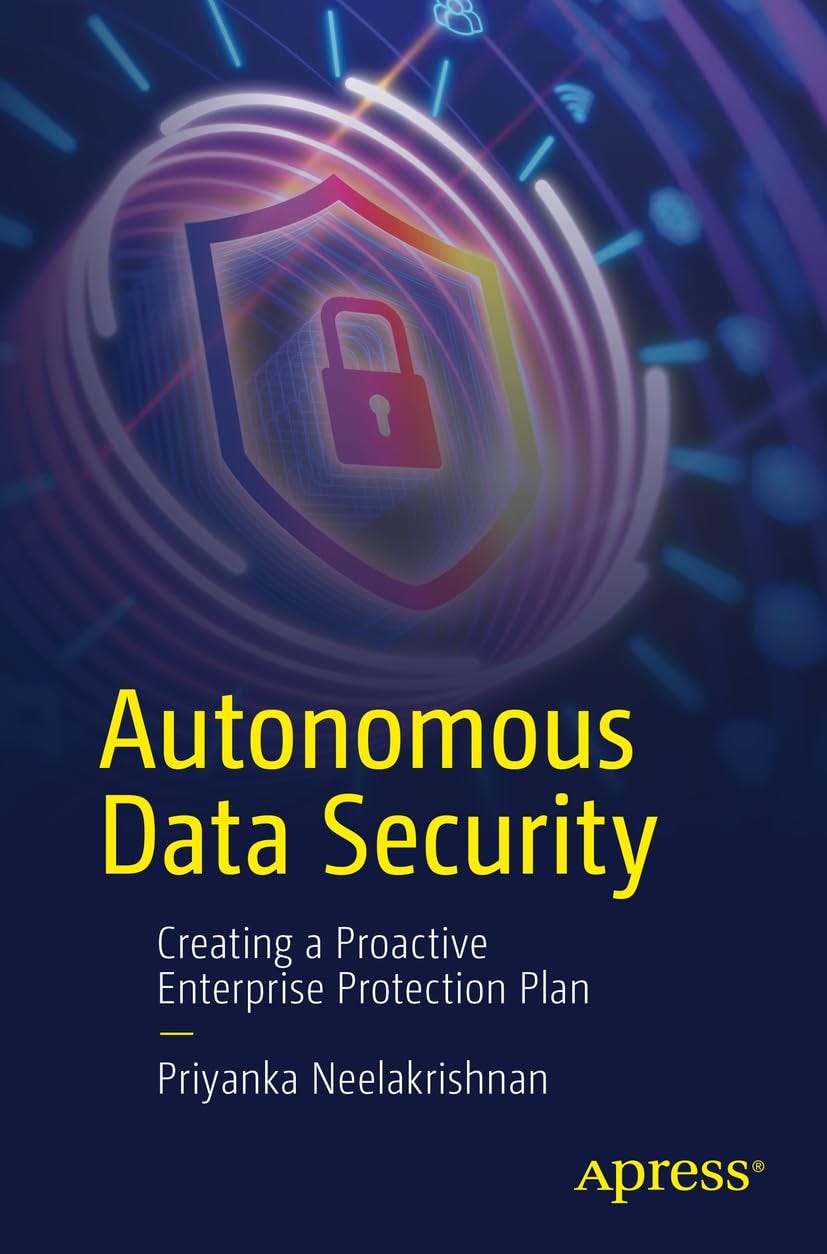
Book of the week - Autonomous Data Security: Creating a Proactive Enterprise Protection Plan by Priyanka Neelakrishnan
The newsletter is also available on LinkedIn, Substack, and Medium.

Are you interested in learning about SQL AI agents in production? If so, please check out my LinkedIn Learning course:
Open Source of the Week
This week’s focus is on the Tau project.
Tau is an open-source Python project from Hugging Face that provides a small terminal coding agent and a readable reference architecture for building coding agents. Rather than hide the agent loop inside a large application, Tau separates the system into three layers: tau_ai for provider-neutral model streaming, tau_agent for the reusable agent core, and tau_coding for the CLI, Textual TUI, tools, project instructions, skills, prompts, and on-disk sessions. The goal is to make the agent harness understandable and reusable, while still shipping a working coding agent that can read files, edit code, run commands, and keep durable session history.
Project repo: https://github.com/huggingface/tau
Key Features
Layered architecture — separates model streaming, the portable agent harness, and the terminal coding application into
tau_ai,tau_agent, andtau_coding.Provider-neutral events translate provider streams into typed events, so Rich rendering, print mode, the Textual TUI, or a custom frontend can consume the same core.
Reusable agent harness — exposes
AgentHarnessas the portable brain for messages, tools, events, the agent loop, and session primitives.Built-in coding tools — include file and shell tools such as
read,write,edit, andbash.Durable sessions — stores append-only JSONL sessions under
~/.tau/sessions/, with resume and branching support.Project instructions and skills — reads project guidance from
AGENTS.md,.tau/, and.agents/, and supports user skills and prompt templates.Multiple provider options — support OpenAI, Anthropic, OpenAI Codex subscription auth, OpenRouter, Hugging Face, local models, and custom OpenAI-compatible endpoints.
PyPI package — installs as
tau-aiand exposes ataucommand for interactive TUI use or one-shot print mode.
More details are available in the project documentation.
License: MIT
New Learning Resources
Self-Hosting Honcho: Free Local Memory for My Hermes Agent
This tutorial from Nidhi Singh walks through moving a Hermes agent's memory from hosted memory to a local setup using Honcho and Ollama. It covers why to self-host, what Honcho is, the driver and dialectic reasoning flow, Docker and .env setup, running local reasoning and embeddings with Ollama, connecting Honcho to Hermes, debugging connection and embedding-dimension issues, and validating that the stack works locally.
Financial Risk & Performance Metrics in Python
This tutorial from NeuralNine introduces financial risk and performance metrics in Python. The available page metadata points to Python-for-finance workflows, financial risk metrics, performance metrics, and the empyrical package, making it a useful pointer for portfolio analysis and quant-style Python projects.
Book of the Week
This week’s focus is on a cybersecurity book — Autonomous Data Security: Creating a Proactive Enterprise Protection Plan by Priyanka Neelakrishnan. The book focuses on enterprise data protection and the shift from traditional, policy-driven security controls toward more proactive and adaptive data security systems. It examines the requirements for building autonomous data protection solutions across cloud, on-premises, and hybrid environments, with attention to varying deployment scales and enterprise needs.
Topics Covered
Data security requirements — why enterprise data security matters and which foundational requirements to consider when designing protection systems.
Traditional data security — how existing data protection solutions work and how to evaluate tools in the market.
Enterprise solution design — how to think about requirements for small, medium, and large enterprise environments.
Policy-driven protection limits — the pros and cons of administrator-defined security policy configurations and why they may not provide complete protection on their own.
Designing toward autonomy — how adaptive learning from the deployed environment can support autonomous data security with or without predefined policies.
Proactive, intelligent data security — how AI can support broader, more proactive data protection.
Future-ready data security — the factors organizations should consider to protect data over time.
This book is aimed at cybersecurity professionals, security analysts, IT administrators, security enthusiasts, and executives who want to understand how autonomous data security can fit into enterprise protection strategies.
The book is available on O’Reilly and on Amazon.
Have any questions? Please comment below!
See you next Saturday!
Thanks,
Rami
Thanks for reading Rami’s Data Newsletter! Subscribe for free to receive new posts and support my work.
Disclaimer: I use AI to help edit the content in this newsletter. If you spot a mistake, please leave a comment — I’d appreciate the heads-up.