
Issue 68: Deep Learning with Python, the Langextract Project, n8n Course
A weekly curated update on data science and engineering topics and resources.

This week’s agenda:
Open Source of the Week - The langextract project
New learning resources - new courses - n8n, Airflow, Google’s Agent Development Kit, and LangChain
Book of the week - Deep Learning with Python by Francois Chollet and Matthew Watson
The newsletter is also available on LinkedIn and Medium.
Do you find this content useful? Please share ♻️ and click 👍
My new course - Designing Forecasting Pipelines for Production with DataCamp is free until January 8th. For more details, please check the following post:
Open Source of the Week
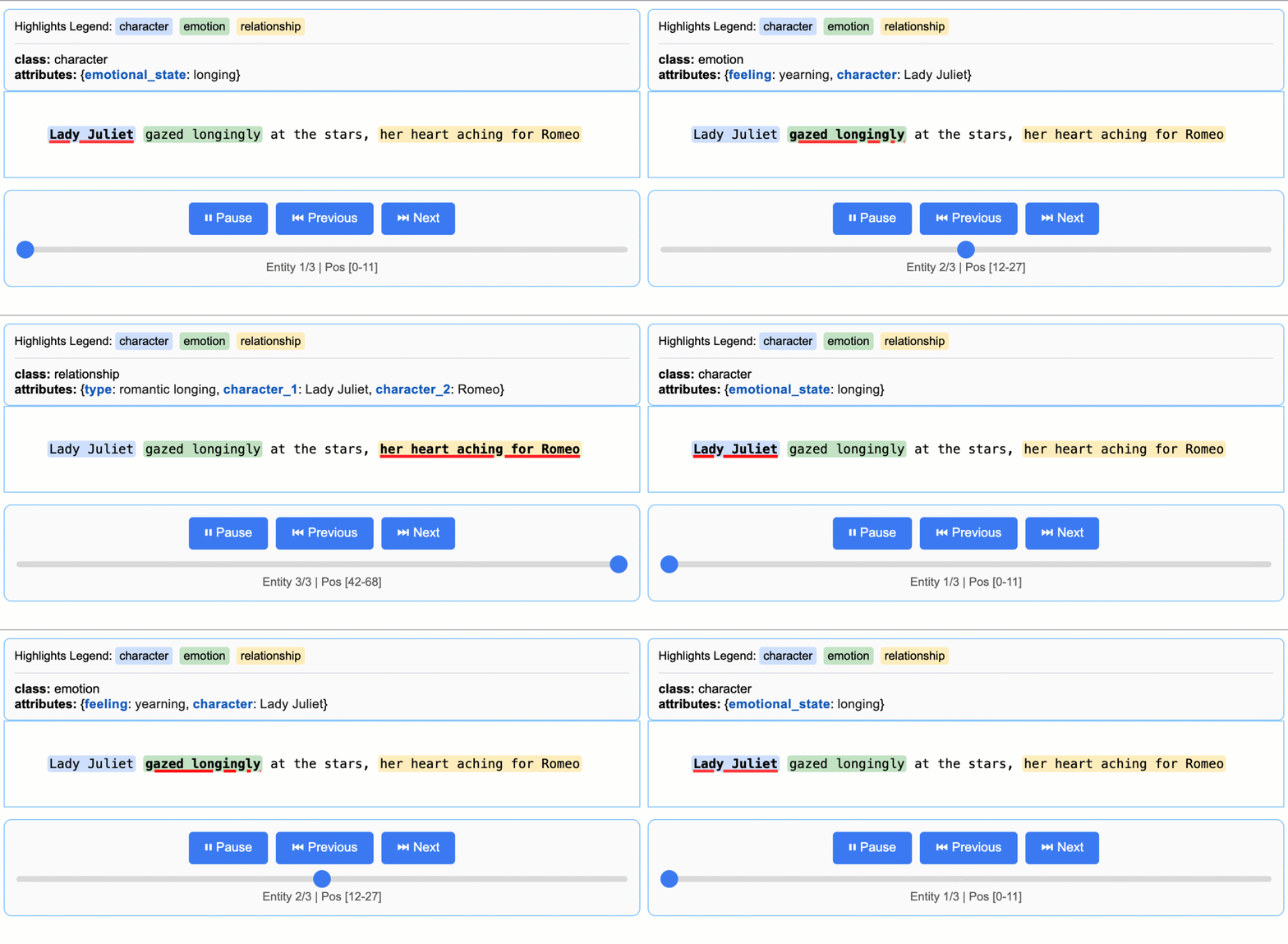
This week’s focus is on the langextract project. The langextract is a new Python library from Google that provides tools for extracting structured information from unstructured text using LLMs, with precise source grounding and interactive visualization.
Project repo: https://github.com/google/langextract
Key Features:
Maps every extraction to its exact location in the source text, enabling visual highlighting for easy traceability and verification.
Enforces a consistent output schema based on your few-shot examples, leveraging controlled generation in supported models, such as Gemini, to ensure robust, structured results.
Overcomes the “needle-in-a-haystack” challenge of large document extraction by using an optimized strategy of text chunking, parallel processing, and multiple passes for higher recall.
Instantly generates a self-contained, interactive HTML file to visualize and review thousands of extracted entities in their original context.
Supports your preferred models, from cloud-based LLMs like the Google Gemini family to local open-source models via the built-in Ollama interface.
Define extraction tasks for any domain using just a few examples. LangExtract adapts to your needs without requiring any model fine-tuning.
Utilize precise prompt wording and few-shot examples to influence how the extraction task may utilize LLM knowledge.
More details are available in the project documentation.
License: Apache 2.0
New Learning Resources
Here are some new learning resources that I came across this week.
Airflow Course
The following tutorial provides a beginner-level course for Airflow. This five-hour tutorial covers the following topics:
Core concepts: DAGs, Tasks, Operators, Hooks, Sensors, XCom
Executors: Local, Celery, Kubernetes, etc.
Writing DAGs using the modern TaskFlow API
Operators deep dive (Python, Bash, File, Cloud operators)
Variables, Connections, Secrets & best practices
XCom internals and anti-patterns
Sensors, trigger rules, and dependency management
Scheduling, Cron, Timetables, Catchup & Backfill
Task Groups and Dynamic Task Mapping
Error handling, retries, SLAs, logging & monitoring
n8n Automation Course
The following n8n tutorial is beginner-level and focuses on setting up various automation workflows with n8n.
Introduction to Google’s Agent Development Kit
This beginner-friendly tutorial provides an introduction to Google’s ADK. It covers ADK key features such as built-in memory, tool abstraction, compatibility with models like Gemini, and external tools.
LangChain Crash Course
The following tutorial by Krish Naik provides an introduction to the LangChain (V1) framework.
Introduction to Tensorflow
The following tutorial by NeuralNine provides an introduction to Deep Learning with Python using Tensorflow.
Book of the Week
This week’s focus is on a deep learning book - Deep Learning with Python by Francois Chollet and Matthew Watson. As its name implies, this book focuses on deep learning applications with Python. The third edition includes new chapters that focus on GenAI and LLM applications. In addition, this book extends beyond Keras and now provides code examples in PyTorch and JAX.
The book covers the following topics:
Foundation of machine learning, neural network and deep learning
Introduction to Tensorflow, PyTorch, JAX, and Keras
Classification and regression
Image segmentation and classification
Time series forecasting
Text classification
Language models and transformer
Text and image generation
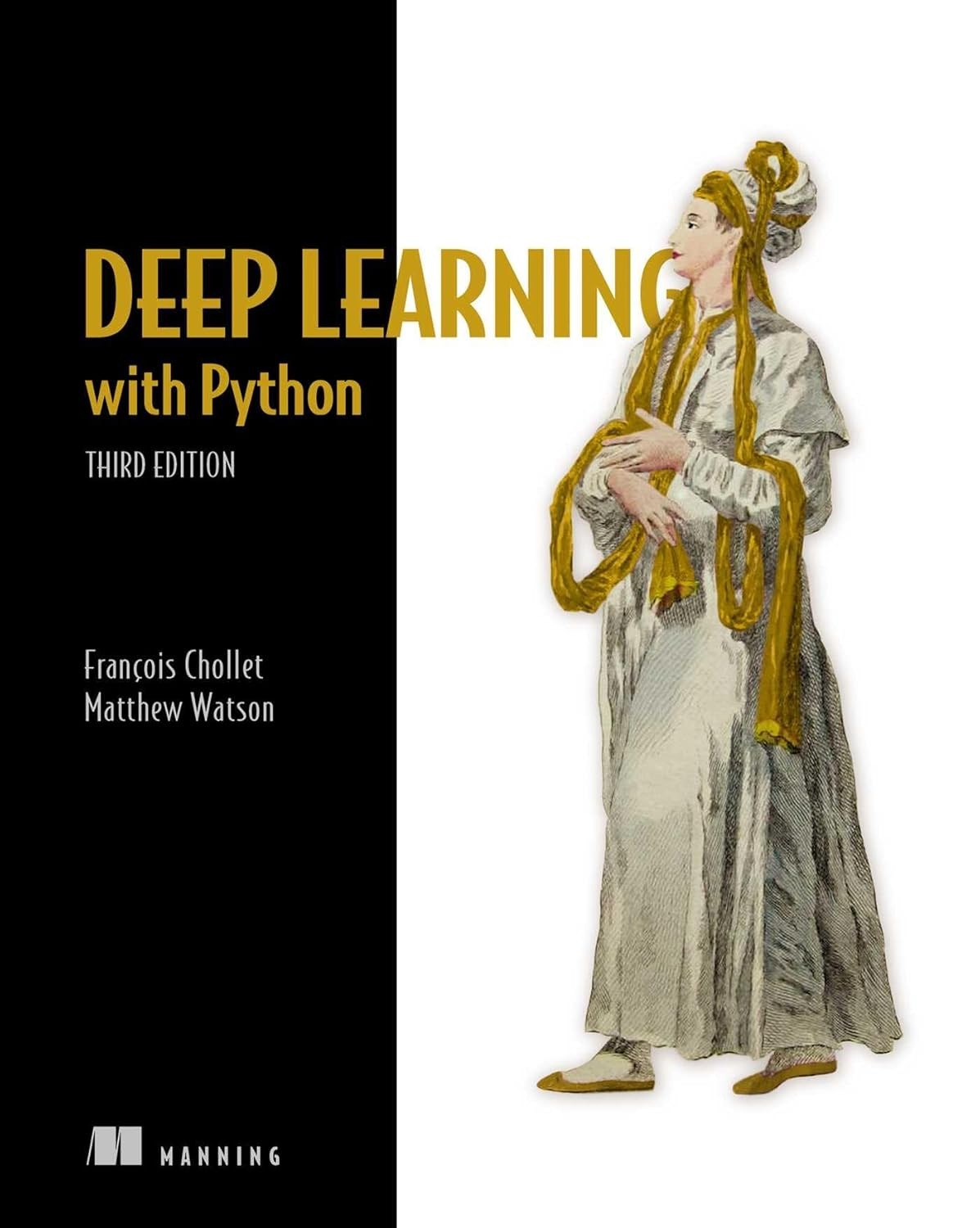
This book is ideal for intermediate data scientists and machine learning engineers who want an applied, code-forward deep learning guide that covers both foundational theory and current practice across major Python deep learning frameworks
The book is available online on the publisher’s website, and a hard copy can be purchased on Amazon.
Have any questions? Please comment below!
See you next Saturday!
Thanks,
Rami